
We chose GulfNet because of their thoughtful, rational proposals and their willingness to work alongside us.

AEON PET Co., Ltd.
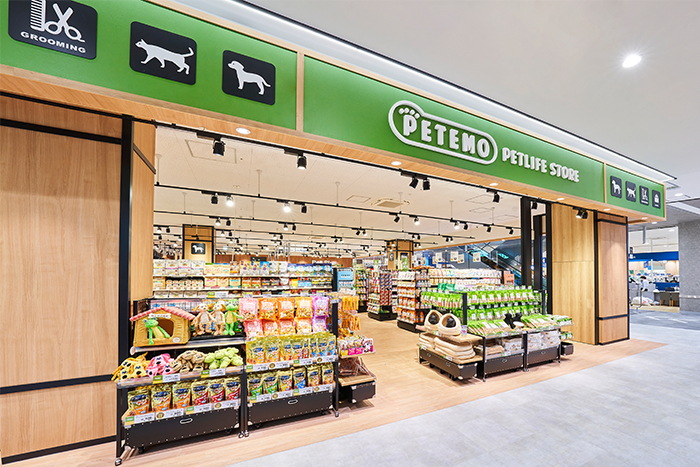
Aeon Pet operates a multifaceted business supporting total pet care, including the sale of pet-related products, grooming salons, pet hotels, animal hospitals, training schools, and adoption centers for rescued dogs and cats.
First, could you please introduce your company’s business and its features?
We, AEON PET Co., Ltd., are a company belonging to the AEON Group, and we operate a variety of businesses specialized in pets.
We operate the Animal Hospital Business, where veterinarians and veterinary assistants provide medical care in clinical settings to help maintain the health of pets.
We also manage the Service Business, which includes grooming salons (pet beauty salons) and pet hotels.
Through the Retail Business, we provide suggestions and solutions for pet lifestyles by selling pet-related goods.
These three core businesses are represented in approximately 200 stores nationwide under the brand name “PETEMO.”
What recent trends have you observed among your customers, and which business area are you currently focusing on?
Rising awareness of proper pet ownership and health has fueled a significant increase in the demand for, and complexity of, veterinary medical care. Recognizing the growing prevalence of pet diseases, we are closely monitoring this trend.
We currently operate eight highly specialized hospitals capable of delivering advanced medical treatment. While our core focus remains veterinary care, we strategically develop our complementary services in parallel.
It seems that you are placing importance on training veterinarians and improving medical technology. Could you tell us about your initiative called AEON PET Academy?
AEON PET Academy is an in-house educational initiative designed like a university. We launched our first faculty—the Faculty of Animal Hospitals—in 2019.
Employees who graduate from AEON PET Academy leverage the skills they have acquired to take on leadership roles in their specialized fields and train the next generation. More faculties are continuously being established.
As of this year (2022), we’ve established our fourth faculty, and we plan to continue developing more in the future.
Please tell us about the process that led to the adoption of the service. What issues were you facing at the time?
At the time, it had become the norm for the Information Systems Division to spend 80–90% of its working hours to dealing with phone support and routine tasks.
Our inability to adequately address requests and inquiries from other departments became a major hindrance, fueling our strong motivation to break this unproductive cycle.
The Information Systems Division was working hard—no one was at fault. However, from the perspective of other departments, it seemed like the division was unresponsive.
Because of the sheer volume of work and the lack of a structured management scheme, we were always overwhelmed by immediate tasks. It had become a negative cycle. We felt that we had to break this cycle somehow.
When considering the service, what were your selection criteria? What set this apart from other providers? What ultimately led you to adopt it?
Of course, cost was a factor, but we placed greater value on three main points.
The first is your 24/7 concierge support service.
We operate animal hospitals and are responsible for the lives of dogs and cats. If a problem occurs in the middle of the night, the on-site staff feel very anxious. Being able to get help at any time gives them great peace of mind. In fact, the staff at our animal hospitals have been very pleased with this. “24/7 support” is truly a huge benefit.
The second was a solid track record.
Knowing that your company has worked with many large corporations gave us reassurance.
The third point was the well-thought-out onboarding approach.
This probably stemmed from the expertise your company has developed. Your suggestions—such as “organizing tasks while working side-by-side” and “how to successfully implement the system”—were very well-considered and logical.
These three factors were instrumental in our decision.
Did you face any challenges during implementation or notice anything unexpected?
We initially underestimated the extent of our operational blind spots.
For instance, routine task handovers, even those documented through interviews, were prone to overlooking critical details, which subsequently caused operational errors.
By collaboratively identifying the root causes of these failures and prioritizing a stringent PDCA cycle, we successfully visualized and improved every task.
Achieving this relationship—where continuous improvement is driven by learning from every failure—in just one year was a major success, and your company’s dedication to improvement was truly impressive.
A separate challenge involved network support in our large, multi-functional facilities (Animal Hospital, Service, and Retail). Because the network is shared across all three business lines, a single network issue affects all operations. Working closely with your helpdesk, we engaged in repeated trials to establish protocols for the fastest possible network restoration and accurate internal communication of technical issues.
What kind of results did the implementation of the service bring?
Having a GulfNet employee stationed on-site created a system where all departments could work together to solve problems. We’ve seen real results in problem-solving and are truly grateful.
Could you share some feedback from employees after implementation?
Information Systems Division
Previously, our entire day would be consumed by responding to inquiries and performing routine tasks, but that’s no longer the case. We now have time for other work and can take a proactive approach. Due to the nature of our tasks, we often couldn’t respond immediately to phone or email inquiries. But now, with the helpdesk handling responses, things have improved greatly. It also reassures the people making inquiries.
Store Staff
There’s a sense of security in knowing that issues will be resolved quickly. The helpdesk staff are good listeners, so it’s easier to explain problems. The speed of response has also been surprisingly fast.
Previously, when stores emailed the Information Systems Division, replies were often delayed, which led to the misconception that the division was unresponsive. Fast response time is the most reassuring thing for store staff. We’ve received many positive comments from them.
Also, the fact that inquiries, which were previously split across multiple channels, are now centralized in the helpdesk has simplified things. Everyone knows, “If you’re in trouble, go here,” and that’s a relief.
What is your impression of GulfNet?
During our recent visit to your company, your friendly employees left a strong impression on us.
We’ve seen various helpdesks across many sites. Typically, helpdesk operators work in cubicles with partitions, but your space was open, with no partitions—so everyone can see what’s happening around them.
When someone needs help, others can quickly recognize the situation and provide support.
The engagement and enthusiasm of your staff immediately conveyed a strong and positive image of your company.
Has your impression of our company changed after implementing the Concierge Service?
I believe a large part of the positive impression comes from the Gulfnet staff who supported us.
You truly stood by us and worked with us. That’s something we value deeply.
Finally, could you share your future outlook?
Thanks to your cooperation, Phase 1—establishing the Support Center and consolidating contact points—has been successfully completed.
In Phase 2, our goal is to strengthen the support system by broadening the entry point for inquiries.
We hope to create a structure where we can properly run the PDCA cycle, improve quality, and enhance our FAQs.
We also want to improve our employees’ IT literacy.
Our workplace is primarily made up of people who love pets, so we want to reduce the time spent on admin tasks with the help of IT. That way, in the Retail Business, they can spend more time “talking with customers”; in the Service Business, more time on “grooming”; and in the Animal Hospital Business, more time on “treatments.”
As the Information Systems Division, we want to support this by using IT to improve the quality of their core tasks.
For example, it might be interesting to conduct in-house training on “how to effectively use IT.”