
The proven reliability of GulfNet’s solutions in resolving issues, coupled with their extensive support, quickly earned our trust and raised our expectations.

Gyoza no Mansyu Co., Ltd.
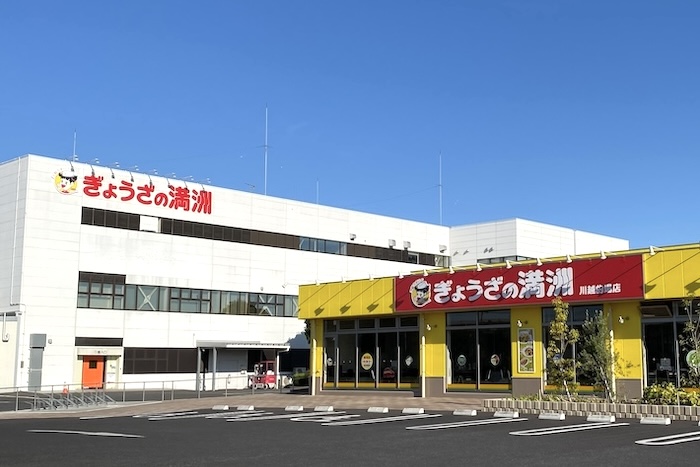
This restaurant company specializes in Chinese cuisine, notably their signature gyoza, all prepared entirely with in-house ingredients. They operate 102 directly owned stores primarily across the Tokyo and Saitama regions. Beyond dining, the company extends its brand reach by selling their gyoza, noodles, sauces, and side dishes both in stores and through their online platform.
Please tell us about your business and its characteristics.
We are Gyoza no Mansyu Co., Ltd., a company engaged in the manufacturing and sales of food products, as well as the operation of Chinese restaurants. We currently operate 102 stores: 50 in Saitama Prefecture, 35 in Tokyo, 1 in Kanagawa, 6 in Gunma, 8 in Osaka, and 2 in Hyogo. We have approximately 2,300 employees, including about 500 full-time staff and around 1,800 part-time and temporary crew members. All processes—from procurement, manufacturing, distribution, cooking, to sales—are handled in-house.
Could you share what led you to consider the service you implemented, and what challenges you were facing at the time?
Previously, we used a third-party system for Time and Attendance Management and handled shift scheduling with paper-based shift tables. However, the system we used was not compatible with shift management integration, which led us to search for a new service that could seamlessly link Time and Attendance with shift management.
One challenge was accurately understanding working conditions from the head office. Although our standard policy is a five-day work week for all employees, there are instances where it is difficult to schedule shifts accordingly, or changes may occur due to various reasons. It was difficult for stores to report every change to the head office in real time, so we often lacked complete visibility. That’s why we sought to integrate Time and Attendance Management with shift management to gain accurate, real-time insights and improve working conditions.
Another issue was improving operational efficiency, reducing costs, and contributing to SDGs through paperless operations. By systemizing the entire shift-related process, we hoped that both store managers and staff could handle everything online, thus making it the first step toward broader paperless initiatives.
What were your selection criteria when considering the service, and what led to your decision?
We initially vetted several vendors introduced by our business partners. However, many of those options were narrowly focused on shift management, raising concerns about long-term scalability. GulfNet, in contrast, offered a robust Time and Attendance Management System that inherently included smooth shift management integration. This comprehensive capability was a major draw. We were further impressed by their strong support structure, which included proposing specific implementation methods to ensure a seamless rollout at the store level. GulfNet did not simply sell us a system; they provided end-to-end support—from implementation through to daily operation—which proved invaluable.
Did you face any challenges when implementing the service?
Since we hadn’t really had major problems with the old paper shift schedules, and because a lot of our store managers weren’t very used to using computers, the initial reaction to the new system was pretty negative. We heard a lot of comments like, ‘There’s no way we can do this.’ Getting our store managers trained and comfortable with the new system was definitely a big struggle.
Nonetheless, GulfNet proposed and hosted several training sessions, and we also built internal support structures to promote understanding and buy-in. Although the transition wasn’t entirely smooth, after three to six months, everyone became increasingly comfortable with the system, and we are now operating it with virtually no issues. During our monthly store manager meetings—where area managers gather to review operations—managers who’ve mastered the system now help train others, which has accelerated overall adoption.
What effects has the system had on your head office and stores? Could you share any feedback from each side?
(Head Office)
With the Time and Attendance Management System, daily work records are now reflected in real time, enabling immediate confirmation. This capability has been instrumental in achieving our key objective of accurately tracking shifts and attendance.
Moreover, being able to link the registered data with other systems or use it for different purposes has been extremely helpful. For example, payroll management is one area where this integration has drastically improved efficiency and reduced processing time. The system significantly supports various HR tasks by easily generating categorized lists, such as breakdowns based on employee length of service.
(Stores)
The most significant benefit for our stores has been the crew shift app. By eliminating paper-based requests, the app ensures that shift request are no longer go missing, allowing store managers to begin shift planning immediately upon submission. This has dramatically accelerated the process: stores that previously finalized next month’s schedule on the very last day are now completing it three to five days earlier. Crew members confirm the value, noting the app makes submitting requests “easier than paper,” checking shifts “convenient via smartphone,” and personal scheduling “simpler.”
As for the Time and Attendance Management System, the switch from vein recognition to facial recognition has improved both speed and ease of use. Vein recognition often failed during cold seasons, and during shift changes, lines would form as crew waited. Facial recognition, however, works smoothly—even with masks on—making the process much faster. Previously, we had to re-register winter-specific vein data as a workaround, but that’s no longer necessary. Now, stores can also update registration information directly, which was previously limited to the head office, making the system even more user-friendly.
Did you notice anything unexpected after implementing the service?
At the head office, we were pleasantly surprised by the system’s robust capability to input and seamlessly link detailed employee and crew data with other systems. This unforeseen integration has allowed us to streamline several tasks we hadn’t originally planned for.
The shift management system has empowered store managers by providing real-time visibility into staffing surpluses and shortages across all locations. This shared awareness enables immediate collaboration—for instance, identifying a shortage at a nearby store and quickly coordinating solutions like staff reassignment. This capability fosters better collaboration and problem-solving among all stores.
As part of our SDGs initiatives, we are moving towards paperless operations. With support from GulfNet, we are currently introducing a solution to digitize employment contract documents. To further advance this initiative on-site, we also aim to nurture IT leaders. Since we have a history of adopting automation and IoT tools—such as POS systems, auto-ordering, and touch panel ordering—we want to actively pursue digital transformation (DX) at our stores. We look forward to GulfNet’s continued proposals and support for this journey.